LUXURY MOONHOTELA VIRTUAL
LUNAR RETREAT

THE MOON HOTEL / AIDEN’S COOKBOOK

Cooking
with Aiden.

From the steak table to something sweet. Six recipes from the Moon hotel kitchen.

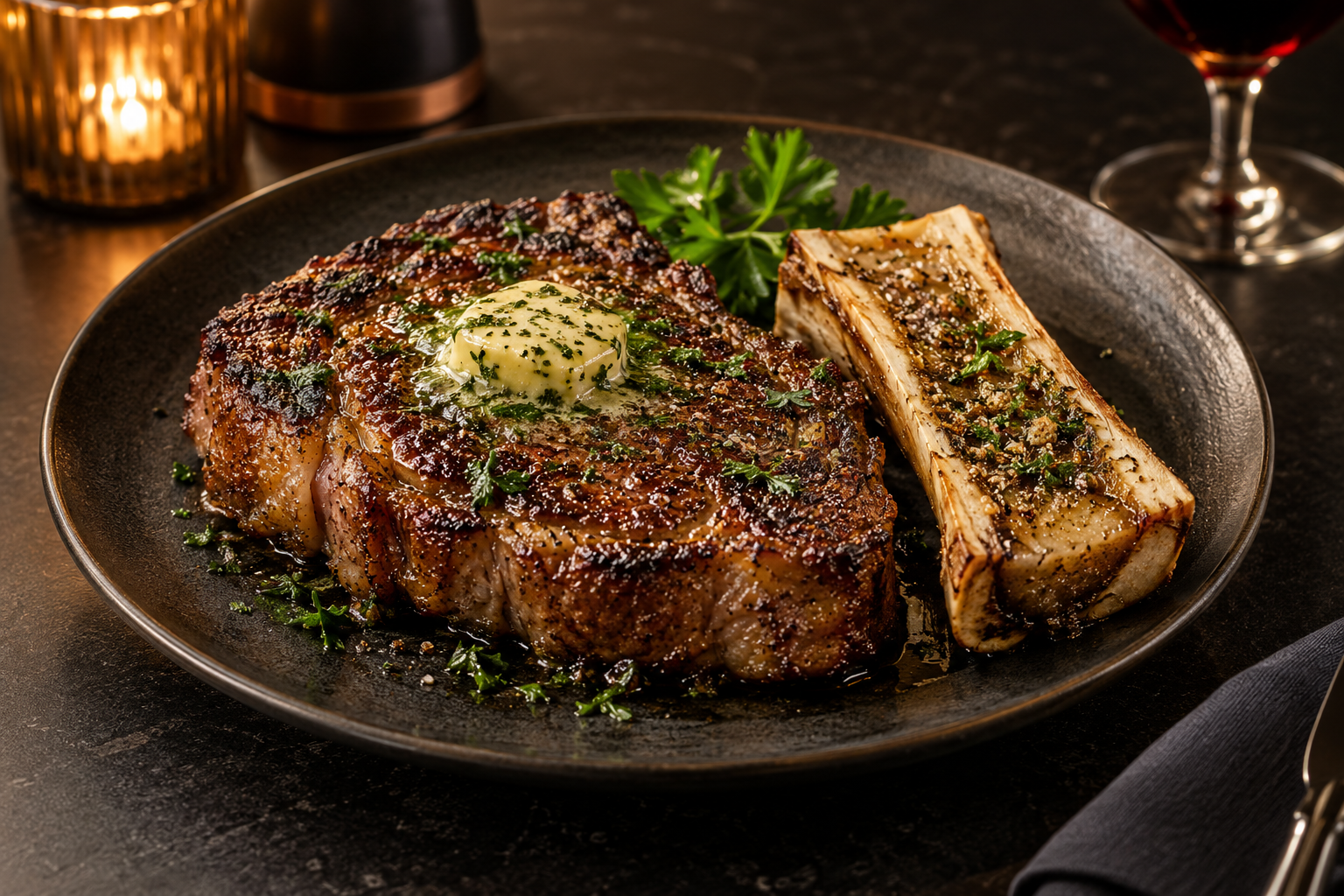
Illustrative photograph of ribeye, roasted bone marrow and herbs on a dark plate.
Steak & marrow · illustrative artwork

01 / CAST IRON + OVEN

Ribeye & roasted bone marrow

A dark crust, melting marrow, and a sharp parsley dressing. The generous one.

Serves
2
Time
About 45 minutes
Equipment
Cast-iron pan, roasting tray, thermometer

Method

  1. Prepare. Heat a conventional oven to 180°C. Pat the steak completely dry and salt all sides. Keep the bones refrigerated until ready to roast. Mix parsley, shallot, capers, lemon juice and olive oil in a small bowl.
  2. Roast the marrow. Put the bones cut-side up on a rimmed tray and season lightly. Roast for roughly 15–25 minutes, checking early: the marrow should be hot, soft and gently bubbling, without draining out of the bones. Thickness changes the timing.
  3. Build the crust. Heat the pan over medium-high heat, then add the neutral oil. Sear the steak, turning every 60–90 seconds until both sides have a deep brown crust. Hold the fat edge against the pan with tongs for about a minute.
  4. Baste and finish. Reduce the heat to medium-low. Add butter, garlic and thyme; tilt the pan and spoon the foaming butter over the steak. Check the centre with a thermometer. If the crust is ready before the centre, finish the steak in the oven until it reaches 63°C (145°F) before removing it from the heat.
  5. Rest and serve. Rest the steak for 5–8 minutes. Slice across the grain, spoon over a little pan butter and add flaky salt. Serve the marrow in its bones with the parsley dressing and sourdough. Scoop a little marrow onto each steak slice.

The dressing matters: lemon and capers balance the richness. Serve it beside the steak so the crust stays crisp.

Back to the collection

02 / LOW OVEN + HOT PAN

Reverse-seared ribeye & brown butter

Gentle heat first. A hard sear last. For a thick steak and a patient evening.

Serves
2
Time
About 60–90 minutes
Equipment
Oven rack, tray, heavy pan, thermometer

Method

  1. Dry and season. Pat the steak dry and salt evenly. For an even drier surface, place it on a rack over a tray, uncovered in the refrigerator for 8–24 hours. This advance step is optional.
  2. Cook slowly. Heat a conventional oven to 110°C. Put the steak on an oven-safe rack over a tray. Cook until the centre reaches about 55°C; start checking after 35 minutes. A thick steak may take substantially longer. This is an intermediate temperature, not the serving endpoint.
  3. Make the butter. While the steak cooks, melt the butter in a small saucepan over medium heat. Swirl until the milk solids turn golden and smell nutty. Take it off the heat immediately, add garlic and thyme, then stir in the lemon juice once the bubbling settles.
  4. Sear and check. Heat a heavy pan over high heat and add the oil. Sear both faces and the fat edge, turning often, until well browned. Check the centre: it must reach 63°C (145°F) before leaving the heat. If needed, return to the oven briefly rather than burning the crust.
  5. Finish. Rest for at least 3 minutes, then slice across the grain. Spoon over the warm brown butter, add pepper and finish with a small pinch of flaky salt.

A thermometer is the key tool here. Follow the centre temperature rather than trying to match a fixed cooking time.

Back to the collection

03 / TWO-ZONE CHARCOAL

Charcoal ribeye & green herb sauce

Smoke, a crisp fat edge, and a bright herb sauce. Dinner made outdoors.

Serves
2
Time
About 35–50 minutes, plus lighting the grill
Equipment
Charcoal barbecue with lid, tongs, thermometer

Method

  1. Make the sauce. Stir together parsley, oregano, garlic, vinegar, olive oil and chilli. Season with a small pinch of salt. Let it sit while you prepare the grill.
  2. Set two zones. Use the barbecue outdoors. Bank fully lit charcoal on one side, leaving the other side without coals underneath. Clean the grate. Pat the steak dry, rub with neutral oil and salt all sides.
  3. Sear over the coals. Place the steak over the hot zone. Turn every 60–90 seconds until a good crust develops. If dripping fat causes flames, move the steak to the cool zone until the flames subside.
  4. Finish indirectly. Move the steak to the side without coals and close the lid. Turn occasionally and check the centre, away from any bone. Continue until it reaches 63°C (145°F) before removing from the grill.
  5. Rest and carve. Rest for 5–8 minutes, then slice across the grain. Add black pepper and flaky salt. Serve the herb sauce on the side or spoon a little over the sliced meat.

Keep the sauce off the steak until serving. Wet herbs belong at the table, not on the hot grate.

Back to the collection

04 / PAN-SEARED / THE STEAK TABLE

Peppercorn striploin

A proper steakhouse sauce, with a little mustard and a generous crack of pepper.

Serves
2
Time
About 35–45 minutes
Equipment
Heavy pan, small saucepan, thermometer

Method

  1. Season. Pat the steaks dry and salt both sides. Warm the stock in a small saucepan. Keep the cream ready beside the stove.
  2. Sear. Heat a heavy pan over medium-high heat, add the oil, and cook the steaks, turning every 60–90 seconds, until browned. Reduce the heat if the crust is darkening too quickly. Check the centre of each steak: reach 63°C (145°F) before taking it off the heat. Rest on a warm plate for at least 5 minutes.
  3. Build the sauce. Pour off excess fat and remove any blackened residue, keeping the brown pan juices. Lower the heat and add butter and shallot. Cook gently for 2–3 minutes, then stir in the crushed peppercorns for 30 seconds.
  4. Reduce gently. Add the stock and scrape up the browned bits. Simmer until reduced by about half. Stir in the cream and mustard, then simmer gently for 3–5 minutes until the sauce coats a spoon. Add a splash of water if it becomes too thick, and taste before adding salt.
  5. Serve. Slice the steaks across the grain. Stir their resting juices into the sauce, then spoon a little beside the meat. Finish with flaky salt and serve the remaining sauce separately.

Keep the sauce beside the steak rather than covering the crust. Crushed peppercorns give texture; finely ground pepper gives a smoother sauce.

Back to the collection

05 / SEAFOOD / PASTA

Garlic-butter prawn linguine

Sweet prawns, lemon, garlic and a glossy sauce. The lighter side of the hotel table.

Serves
2
Time
About 25–30 minutes
Equipment
Large pot, wide frying pan, tongs

Method

  1. Prepare. If using frozen prawns, thaw them in the refrigerator first. Pat dry. Bring a large pot of salted water to a boil and cook the linguine according to the packet, stopping about a minute before fully cooked. Reserve a mug of cooking water before draining.
  2. Cook the prawns. Heat the oil and half the butter in a wide pan over medium-high heat. Add the prawns in one layer and turn once. Cook until the flesh is firm, pearly and opaque; the FDA recommends 63°C (145°F) for most seafood. Timing depends on size. Transfer to a clean plate.
  3. Soften the garlic. Lower the heat to medium-low, add the remaining butter, garlic and chilli, and cook for about a minute. Keep the garlic pale. Add 75 ml of pasta water and bring to a gentle simmer.
  4. Bring it together. Add the linguine and toss for 1–2 minutes until the pasta is cooked and the sauce lightly coats it. Add a little more pasta water as needed. Fold in the cooked prawns just long enough to warm them.
  5. Finish. Take the pan off the heat. Add lemon zest, lemon juice and parsley, then taste for salt and pepper. Serve immediately in warm bowls.

Pasta water turns butter and juices into a light sauce. Add it gradually: glossy is the goal, not watery.

Back to the collection

06 / DESSERT / MAKE AHEAD

Dark chocolate pots

Small glasses, deep chocolate, and a pinch of sea salt. A calm finish to dinner.

Serves
4 small pots
Time
About 15 minutes, plus at least 3 hours chilling
Equipment
Heatproof bowl, saucepan, four small glasses

Method

  1. Chop the chocolate. Put it in a heatproof bowl. Fine, even pieces melt more reliably than large chunks.
  2. Warm the dairy. Heat the cream, milk, sugar and fine salt in a small saucepan until steaming with tiny bubbles at the edge. Stir to dissolve the sugar, then remove from the heat.
  3. Make the ganache. Pour the warm mixture over the chocolate. Leave for 2 minutes, then stir gently from the centre outwards until smooth and glossy. Stir in the vanilla. If a few pieces remain, set the bowl over barely simmering water and stir briefly, keeping the bowl clear of the water.
  4. Chill. Divide into four small glasses. Cool briefly, then cover and refrigerate for at least 3 hours until softly set. Keep refrigerated until serving; these are spoonable chocolate pots, not a firm pudding.
  5. Serve. Top with a small spoonful of whipped cream and a few flakes of salt. Make up to a day ahead and keep covered in the refrigerator.

Use chocolate you enjoy eating. Higher cocoa percentages make a more intense pot and may need a little extra sugar.

Back to the collection

A note from the kitchen

Times are estimates. Use a thermometer: these recipes follow the USDA guidance of 63°C (145°F) for whole beef steaks before taking them off the heat, followed by at least 3 minutes of rest. Follow any additional instructions on the meat’s packaging.

For prawns, cook until firm, pearly and opaque; the FDA recommends 63°C (145°F) for most seafood. Keep dairy desserts refrigerated.

FDA seafood guideUSDA temperature guideBone marrow technique reference

Back to the Moon hotel